
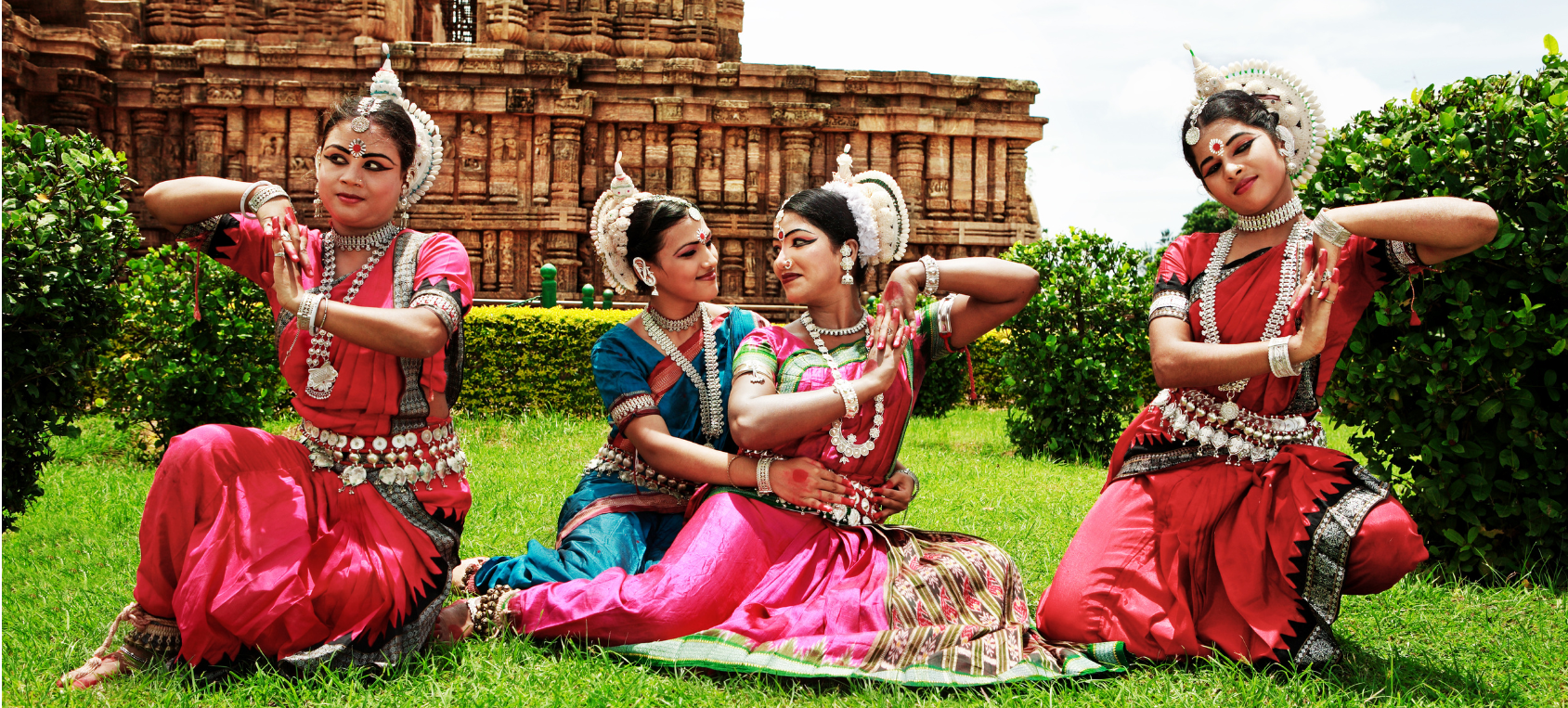
Indian classical music consists of both North Indian (Hindustani) and South Indian (Carnatic) music. It is based on melody and rhythm and does not follow musical conventions that predominate in Western music. Musicians use combinations of melody and rhythm known as ragas; musicians will also improvise around these ragas. Hindustani and Carnatic classical music may be completely instrumental or include a singer. Purists feel that vocalists represent the music in its greatest glory, but instrumental music is just as popular as compositions with vocals.
Indian music is based on religious practices. The origin of the Indian music system known as Raga Sangeet can be traced back about two thousand years to the Vedic Hymns chanted in Hindu temples. In the oldest scriptures of Hinduism called the "Vedas" there are allusions to various stringed and wind instruments. The first written reference to ragas, on which Indian Classical Music is based, is found in the Brhaddesi which was written in the 10th century. In the 13th century, 264 ragas were listed in the book Sangitaratnakara. During the 13th century, Indian classical music was flourishing in the courts of Muslim rulers. Though songs had originally been composed in Sanskrit, songs were then being written in various dialects of Hindi.
During the 16th century, differences between Hindustani and Carnatic music became more obvious. Hindustani music was influenced by Muslim and Persian elements since Muslims conquered the northern part of the subcontinent and established the Mughal empire in the 16th century. Carnatic music was influenced by traditional music played in Hindu temples. Each type was influenced by outside sources but Carnatic music has shown more skill for adding foreign instruments to its arrangements. In the 1960s the Beatles brought Indian Classical music popularity in the West and collaborations between Western and Indian musicians have continued to this day.
Because Indian classical music is based on Hindu religion, many believe that Indian classical music can elevate people to higher consciousness and bring them in contact with the divine universal force. The elements of Indian classical music that cause such effects are the ragas, which create the basis for all songs. Ragas can be generally described as melodic structures that dictate notes in a scale, their relationship to each other, their order from ascending to descending, characteristic movements, and other elements. In order for these ragas to have effect, they must be played at specific times of the day. Both Carnatic and Hindustani music were performed in temples, courts, houses of nobles, and small gatherings called "baithaks". Today concerts are mostly held outside temples, in concert halls, and recordings of Indian classical music performers are very easy to come by.
Popular Hindustani Instruments:
Tabla - A pair of small drums.
Sitar - A long necked lute with movable frets, two gourd resonators, seven playing strings and 13 sympathetic strings.
Sarod - A plucked or bowed fiddle with four to eight strings and sympathetic strings.
Tambura - A four-stringed drone lute.
Popular Carnatic instruments:
Mridangam - A two-headed barrel drum.
Violin - The European instrument but tuned to the tonic and fifth, which is in tune with a Tambura.
Tambura - The same as the Hindustani instrument.
Vina - A four-stringed lute with two gourd resonators.
- Details
- Hits: 7061
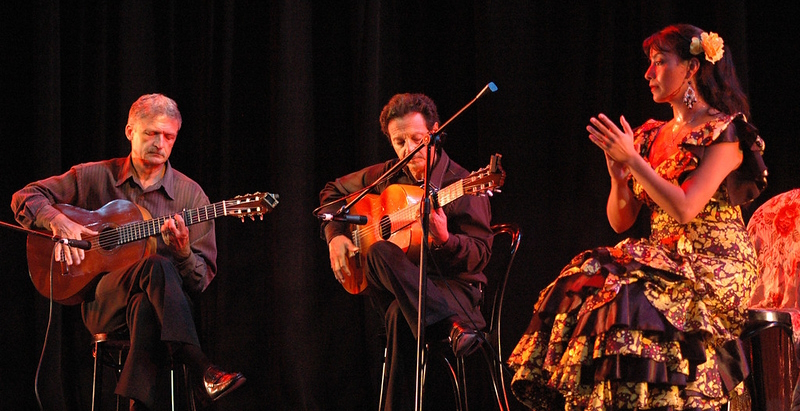
George Svboda, Fred Benedetti, & Gloria Lanuza
Flamenco is the music of Spain. It is characterized by passionate singing, dancing, and percussion. A Flamenco ensemble typically includes a singer or a dancer performing with guitars, and people providing the percussion with rhythmic hand clapping and foot stomping, as well as other hand percussion instruments.
The origin of Flamenco music is controversial but it is generally agreed that the music originated in Andalusia, Spain. In 1492, the Andalusian city known as Granada was the last Islamic city to fall to Christian Reconquest. The Islamic refugees who populated Granada: Arabic, Jewish, Christian, and Gitano (or Gypsy), mixed their traditional music to form the beginnings of Flamenco. Although Flamenco was created by all these different musical traditions, over the next few centuries Flamenco became exclusively part of the Gitano/Gypsy culture. Because of this, many people viewed Flamenco as the music of criminals and the underclass and it wasn't until the middle of the 19th century that Flamenco began developing popularity outside of Gypsy culture. From about 1869 to the beginning of the Spanish Civil War in the 1930s, Flamenco music gained popularity through the many cafes cantantes, or cafe singers. During this time, the Palos, or styles of Flamenco music were established and cemented. Since then, over 50 types of Flamenco Palos have been created, and they each have their own mood, rhythmic pattern, and performing traditions. Flamenco guitar also became the most popular instrument of Flamenco music during this time. After the Spanish Civil War until the 1970s, Flamenco continued to gain popularity due to the government leader Francisco Franco's promotion of Flamenco music as the national music used to unify the people of Spain. In the 1980s Flamenco music experienced another golden age; elements of jazz, blues, rock, and even reggae were incorporated into Flamenco's sound, which people called Nuevo Flamenco . This new Flamenco sound, rather than being played through traditional radio broadcasts, was distributed directly to bars, discos, and nightclubs to catch the attention of younger fans. Ironically, it was the Gypsy Kings, a band from Arles, France that played a form of music parallel to Flamenco known as Rumba Catalana, that made the new sound of Flamenco popular around the world. Today Flamenco continues to evolve and is very popular all around the world.
Every part of a Flamenco performance contributes to the Flamenco sound; even Flamenco dancers add rhythms to Flamenco music. But the most prominent instrument in Flamenco music is the guitar.
The Flamenco guitar is a slightly smaller version of the classical acoustic guitar. The traditional Flamenco guitar is made of several types of wood: Cypress for the back and sides, cedar for the fingerboard, pine or spruce for the top, rosewood for the bridge, and ebony for the fret board.
Although the guitar is now the most prominent instrument, Flamenco began as nothing more than vocal music and hand claps. The singer's role is still very important to the music because it sets the mood and is used to connect with the audience on an emotional level. There are two basic forms of Flamenco song; jondo or "deep", slow, sad songs about death or lost love, and chico or "small", faster, happier dance-like songs.
Handclaps called palmas are designed to add rhythms to the music, as well as encourage the performers. There are two types of palmas: sordas"deaf"-palmas, which are muffled hand claps created when clapping the cupped palms of hands together, and secas"dry"-palmas, which are loud hand claps created when hitting the cupped palm of the left hand with the middle fingers of the right hand.
Castañuelasalso known as "Castanets"are spoon shaped pieces of wood also used to add percussion to a Flamenco performance. They are traditionally tied together with a piece of string and played by fastening the string around the thumb and index finger, and clapping the two pieces together with the fingers.
Zapatos or Botos are shoes and boots that are more like a tap dancer's shoes; nails are driven into the soles to produce loud clicks when struck. Traditionally, male Flamenco dancer's movements consist of complicated toe and heel-clicking steps known as Taconeo, which add the rhythm, and which these Zapatos or Botos help to emphasize.
- Details
- Hits: 7152
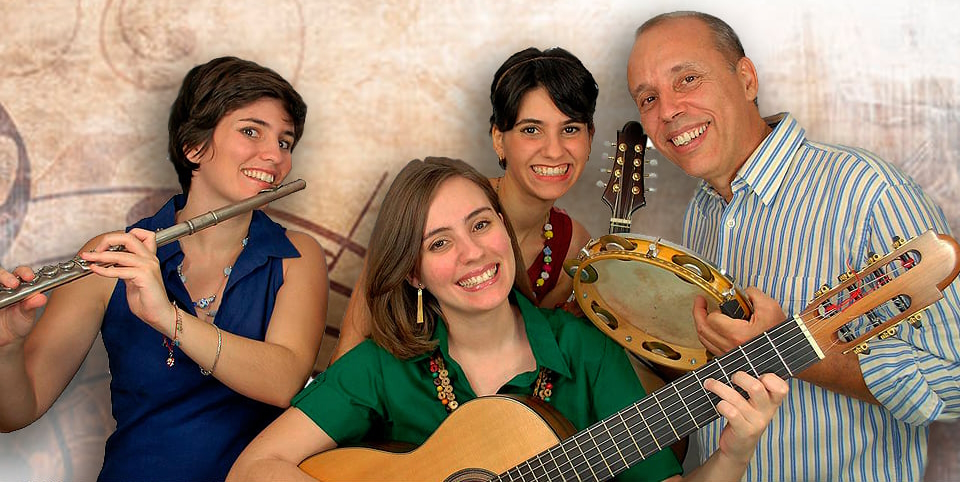
Choros das 3
Choro, an instrumental music of Brazil, has been described in American terms as the "Brazilian ragtime" or the "New Orleans jazz of Brazil." With roots dating back to the late 1800's, choro developed out of melodies coming from Europe and rhythms coming from Africa. It became one of the first authentically Brazilian instrumental musical styles. Flutist Paula Robison said, "the choro tradition in Brazil is very much like the blues in America. It Brazil, choro was the combination of the African tradition mixed with the Portuguese; the beautiful singing lines of the Portuguese melody combined with the life-giving heartbeat of Africa." Choro was most popular during the 1920's in Rio de Janeiro although it can still be seen thriving in all of Brazil today. The word choro in Portuguese means "cry" and refers to the emotive nature of the soloing instruments. But choro is anything but sad with its fast-moving melodies, syncopated samba rhythms, and virtuosic improvisation. It is often played in all-night jams called rodas which take place in public bars or squares. The instrumentation of choro can include a variety of acoustic instruments. The traditional 7-string guitar which has an extra low string plays contrapuntal bass lines. The cavaquinho, a type of Brazilian ukulele, plays chords in a quick syncopated rhythm that helps to set the samba. The percussion section features primarily the pandeiro which looks like an American tambourine and is played by hand. Finally the melody may be played by a variety instruments, most commonly including flute, clarinet, bandolim (Brazilian mandolin), and more. The most important and well known composer of choro was Pixinguinha. He is considered to be one of the godfathers of choro and his birthday is celebrated as National Choro Day in Brazil. Pixinguinha has been called "the Bach of choro" by musicologists because of his perfect harmonic structure and virtuosity. In the 1920's he traveled to Paris with his group which was the first Brazilian group to perform outside of Brazil.
- Details
- Hits: 6388
Also known as Filmi or Hindi Movie Music, 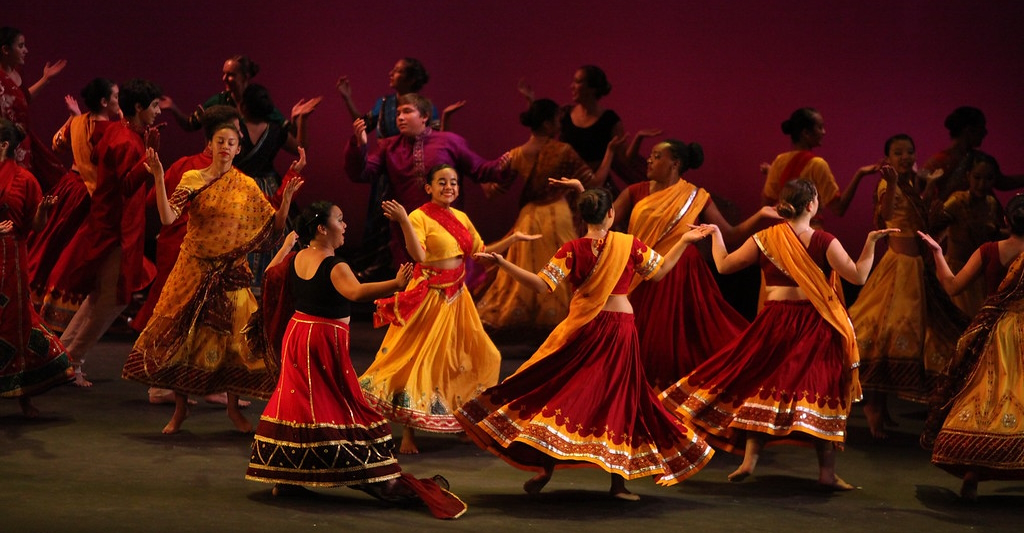 ollywood music is essentially the soundtrack music to Indian popular movies. Bollywood is a combination of the words "Bombay" and "Hollywood" which represents how Bombay, the original name of the city now known as Mumbai, is the film capital of India much like Hollywood is the film capital of the United States. The songs of Bollywood are usually sung by the most talented singers in India of the time of the movie's creation. Bollywood films are filled with the entire spectrum of emotions from utter depression and loss, to uninhibited passionate joy and the music created by Bollywood composers is meant to reflect the emotions being expressed on screen. During the first part of the 1930s, as the Indian film industry moved from silent films to talkies, Bollywood music and dance numbers were incorporated into Indian film. Most of the people who were initially involved in creating Bollywood compositions were from Indian urban theater traditions. Bollywood music was greatly influenced as a result, and even used many of urban theater songs that contained a mixture of Indian classical, light-classical, and local folk music traditions. During the mid 1930s, Bollywood was being heavily influenced by Hollywood and began experimenting with Western instruments, harmony and orchestration. By the 1940s Bollywood composers were including jazz styles, waltzes, and other Western or Latin American influences in their music. Since this time, Bollywood music has continued to experiment with and include foreign musical instruments, structures, and styles in their music based on traditional Indian music. Since Bollywood music was created, it has become very popular and can be heard outside of Bollywood movies in every day life. Composers of Bollywood music have used many of the traditional instruments used in Indian Classical Music. They have also used and experimented with foreign instruments, particularly the guitar because it can be played using a slide to sound much like the Indian Sitar. Today, Bollywood music has permeated Indian culture; it can be heard in almost any public space. It is played at home, in bazaars, on buses, and anywhere else where music is enjoyed. It has become particularly popular for weddings to include Bollywood song and dance numbers as part of their celebration. It is played in formal and informal situations among the varying social classes of India.
- Details
- Hits: 7228
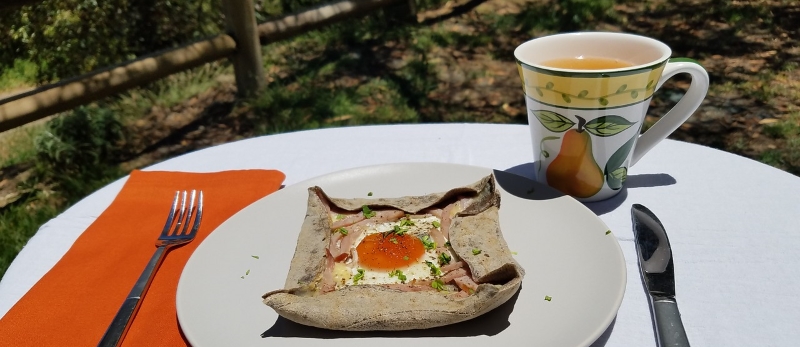
The recipe of the month is for French Galette Complète, a savory form of crêpe from the Brittany region. The crêpe itself has only 3 ingredients (buckwheat flour, water and salt) but is adorned with ham, cheese and a soft-cooked egg.
The French Crêpe (pronounced “krep”) is known around the world and has a huge number of variations. The circumflex above the initial “e” in the word orthographically denotes that previously the letter “s” followed the “e”, so presumably the original spelling was crespe. The word crêpe is derived from the Latin work crispa meaning either curly, wrinkled or crinkled, and those sorts of qualities are shared by crepe paper and crepe fabric.
Crêpes are, of course, quintessentially French (although many countries have their own versions). They are most often eaten for lunch or dinner (less so for breakfast!), and it is not rare that someone might enjoy a savory crêpe for a main course and follow that with a crêpe sucre (sugar crêpe) for dessert. One poll of Parisians found that of the many varieties of crêpes, the basic crêpe sucre was the most popular. February 2nd is the Catholic holiday of Candlemas, and it is also known as jour des crêpes (day of crêpes) as on that day crêpes, which are considered to symbolize prosperity, are enjoyed throughout the nation.
It is generally believed that the French crêpe had its origins in Brittany and certainly that area of France has a higher number of “crêperies” (shops, stands or restaurants that specialize in crêpes) than anywhere else. However, the type of crêpe that is most common in Brittany is not the white, wheat kind that most people outside of France are familiar with. Known as Galette Bretonne, these crêpes are made of buckwheat. And the most popular type found there is the Galette Complète, which are savory, not sweet. Therefore, it is possible that the very first crêpes in France were made of buckwheat flour, not wheat flour. Brittany is also famous for its apples and as many as 200 varieties are grown there. Not surprisingly, the most popular accompaniment for a Galette Bretonne is very dry (brut) sparkling cider, served in wide-mouth cups known as bolées, a.k.a “cider bowls”.
“Galette” is the French word that refers to a small round cake. There are many types--not all are paper thin. Although galettes are often make of buckwheat, there are also potato galettes (galette pomme de terre). Many types of galette share a common feature with Galette Bretonne, the edges of the pastry are folded inward, partially covering whatever filling is used. Often these other kinds of galettes are round in shape, but in the case of Galette Bretonne: a square shape is created by making four equal folds of the round crêpe.
The biggest difference between crêpes and pancakes is that crêpes don’t have any leavening agents like yeast or baking powder, so they don’t rise when cooked. They should be thin and flat. Additionally, crêpes typically include eggs in the batter and sometimes use milk instead of water. Whatever you decide on, the most important consideration is that the batter, unlike pancake batter, should be very thin, about the thickness of heavy cream. The problem that has confronted many chefs and cooks with preparing traditional Galette Bretonne is having the buckwheat crêpe crack and crumble during folding. The solutions these cooks have arrived at is to add either eggs or wheat flour to the batter. This is not traditional and there may be a better solution: cooking the crêpe at a higher temperature so that it crisps up (and unlike wheat crêpes, they should be slightly crispy) before it dries out. As always, experiment and find out what works best for you.
Making your own crêpes is a lot easier if you have the proper equipment. In France most households have a carbon-steel or non-stick flat pan more or less a foot wide with a shallow edge. Using one of these pans, you have to develop the technique of tilting and rotating the pan quickly to evenly distribute the batter. Some are made of cast-iron, presumably not for people with weaker wrists! If you wish to old-school-it, knock yourself out. Enter the “billig” or crêpe-making machine. Modeled on professional crêpe-makers used by restaurants, consumer-level crêpe-makers are inexpensive and highly versatile. They are flat, round, non-stick cooking plates with enclosed electric coils beneath and the temperature is adjustable. We love ours and have used it for making fajitas, pancakes, parathes, and omelets. Apparently they can even fry bacon, but we haven’t tried! Ours heats very evenly. Such machines run from around $30 - $40 (although much more expensive ones can be found). We have a Proctor-Silex one, which seems to be a bit sturdier than the cheaper Nutra-chef one that we found was not airline baggage-handler proof. Typically, these machines come with “spreaders” – T-shaped utensils for spreading the batter and a long thin spatula useful for folding crêpes and removing them from the pan. Using the spreader requires a level of skill I have not yet mastered. So ever open to experimentation, I donned a pair of thick oven gloves, lifted the entire crêpe making machine, tilting and swirling until I created a round thin crêpe. Worked like a charm, but do this at your own risk, and I wouldn't attempt it with anything other than thick oven gloves!
Galette Complète are topped with ham, cheese and a single whole egg. Recipes vary on preparation. Perhaps the most traditional method is to add the toppings on the crêpe while it heats up. Other recipes call for making a stack of crêpes, each browned on both sides and then re-heated with the ham, cheese and egg on top. Other recipes call for cooking the egg separately and adding it before folding in the sides. America’s Test Kitchen, no fans of tradition, suggest baking everything in an oven! But perhaps the oldest method is to add the batter to the pan, sprinkle a circle of cheese half way from the center (creating, as one recipe observed, a wall to prevent the egg from spreading too far), add pieces of ham on top of the cheese and then cracking an egg in the center. Some cooks use a spoon to spread the egg white over the cheese. I’m not sure what that achieves; there should be no disadvantage to simply waiting until the egg white is fully cooked. The only problem I encountered was not making a sufficient wall with the cheese which let the egg white run off the crêpe, but leveling the machine and adding more cheese in subsequent attempts solved this problem. After some experimentation I found cooking one side of the crêpe, flipping it over and then adding the toppings seemed to work best.
Most recipes call for the use of Swiss Emmental cheese, but others suggest using French Comte which is for all intents and purposes the same as Swiss Gruyère. However, this might not be as cut and dry as it may seem, because in Comte they also make Emmental Français! Confused? Don’t worry, according the Paroles de Fromages (the Cheese School of Paris), “the difference between the Gruyere and the Emmental is above all a question of holes. Those in the Emmental are bigger!”
Cook’s notes:
Whenever a recipe calls for an egg with an unbroken yolk, it’s a good idea to break the egg into a cup or a bowl first and then into the dish you are preparing. It’s more likely that the yolk will break when you crack the egg, than when transferring an unbroken egg from a bowl to a dish. This way if you break the yoke you can try again without ruining the dish!
The New York Times recipe for Galette Complète calls for “Jambon de Paris (or other ham)”. Paris ham is difficult to find and very expensive. Jambon de Paris is unsmoked shank portion ham that is cooked in a stock of a stock made of juniper, coriander, cloves and a bouquet garni. One day I might try making my own! A good substitute would be unsmoked deli ham. If you are buying a whole or half ham, get a “city ham” rather than a generously salted “country ham”. One might be tempted to buy an “uncured ham”, but this is more marketing than science (and poorly regulated by the FDA). Unfortunately, “natural uncured” deli or prepackaged ham have just as many nitrites as hams that are not marketed as such, even though the nitrites are from “natural sources” (like celery juice). 1
The first and last crêpe are unlikely to be a success: the first due to mysterious forces no one really understands and the last one because it is likely there is not enough batter. In France there is a saying “La crêpe du chat” meaning “the cat’s crepe” indicating something that is so ugly it’s only fit for a cat! Nearly all recipes boldly state that the batter should be “rested” for anywhere from 30 minutes to a full day, on the belief that the resulting crêpe will be “lighter”. However, Daniel Gritzer a writer for Serious Eats claims as buckwheat flour has no gluten (resting allows gluten chains to connect), there is no good reason to rest the batter. I tried both ways and also found little difference in the result.
1 Is celery juice a viable alternative to nitrites in cured meats? McGill University’s Office for Science and Society.
Ingredients (for 4 servings):
For the batter:
- 1 Cup buckwheat flour (they have this at Sprouts)
- 1 Cup of water
For the filling:
- 4 Large whole eggs
- 4 Ounces of grated Emmental, Compte or Gruyère Cheese
- 6 Ounces of thinly sliced jambon de Paris or other “city ham” (see notes above)
- Several sprigs of finely chopped Italian parsley (optional)
- Salt and Pepper to taste
Preparation:
- Take the eggs out of the refrigerator and let them reach room temperature (no more than 1 hour).
- Whisk ½ cup of the water into the buckwheat flour.
- Keep whisking and adding water until the batter is very thin, approximating heavy cream in thickness.
- Let the batter rest for ½ hour (optional, see note above).
- Heat the crepe machine up for at least 10 minutes to a temperature of 375 ° (6 1/2 on our machine).
- Pour 1/2 cup of batter onto the crepe machine and using the spreader (or the hack mentioned above) in a circular motion spread the batter into a large round shape.
- When the batter turns dull (no longer shiny, should take about a minute at 375°) flip the crêpe over.
- Create a circle of grated cheese with one ounce of the cheese half way from the center of the crêpe.
- Carefully crack an egg into a bowl or cup and then slide the whole egg onto the center of the crêpe that is cooking.
- Tear or festoon the pieces of the sliced ham and festoon them around the egg yolk.
- Continue cooking the crêpe until the whites of the egg are fully cooked. Please note that this will take some time. But fear not because at 300 – 400 ° the crêpe is very unlikely to burn. Indeed, I purposely cooked a crêpe for 12 minutes at this temperature and it didn’t burn at all.
- Salt and pepper to taste.
- Fold the edges of the crêpe over the cheese and ham (but don’t cover the egg yolk) to create a square (see photo).
- Lightly garnish with chopped Italian parsley (optional).
- Serve with a “bowl” of extra-dry (brute) sparkling alcoholic cider.
Bon Appétit!
Recipe by T. Johnston-O’Neill
Photos by Shari K. Johnston-O’Neill
- Details
- Hits: 7714
Joomla!
Extensions
The Joomla! content management system lets you create webpages of various types using extensions. There are 5 basic types of extensions: components, modules, templates, languages, and plugins. Your website includes the extensions you need to create a basic website in English, but thousands of additional extensions of all types are available. The Joomla! Extensions Directory is the largest directory of Joomla extensions.
Components
Components are larger extensions that produce the major content for your site. Each component has one or more "views" that control how content is displayed. In the Joomla administrator there are additional extensions such as Menus, Redirection, and the extension managers.
Modules
Modules are small blocks of content that can be displayed in positions on a web page. The menus on this site are displayed in modules. The core of Joomla! includes 24 separate modules ranging from login to search to random images. Each module has a name that starts mod_ but when it displays it has a title. In the descriptions in this section, the titles are the same as the names.
Content Modules
Content modules display article and other information from the content component.
User Modules
User modules interact with the user system, allowing users to login, show who is logged-in, and showing the most recently registered users.
Display Modules
These modules display information from components other than content and user. These include weblinks, news feeds and the media manager.
Utility Modules
Utility modules provide useful functionality such as search, syndication and statistics.
Navigation Modules
Navigation modules help your visitors move through your site and find what they need.
Menus provide your site with structure and help your visitors navigate your site. Although they are all based on the same menu module, the variety of ways menus are used in the sample data show how flexible this module is.
A menu can range from extremely simple (for example the top menu or the menu for the Australian Parks sample site) to extremely complex (for example the About Joomla! menu with its many levels). They can also be used for other types of presentation such as the site map linked from the "This Site" menu.
Breadcrumbs provide users with information about where they are in a site.
Page 19 of 32